
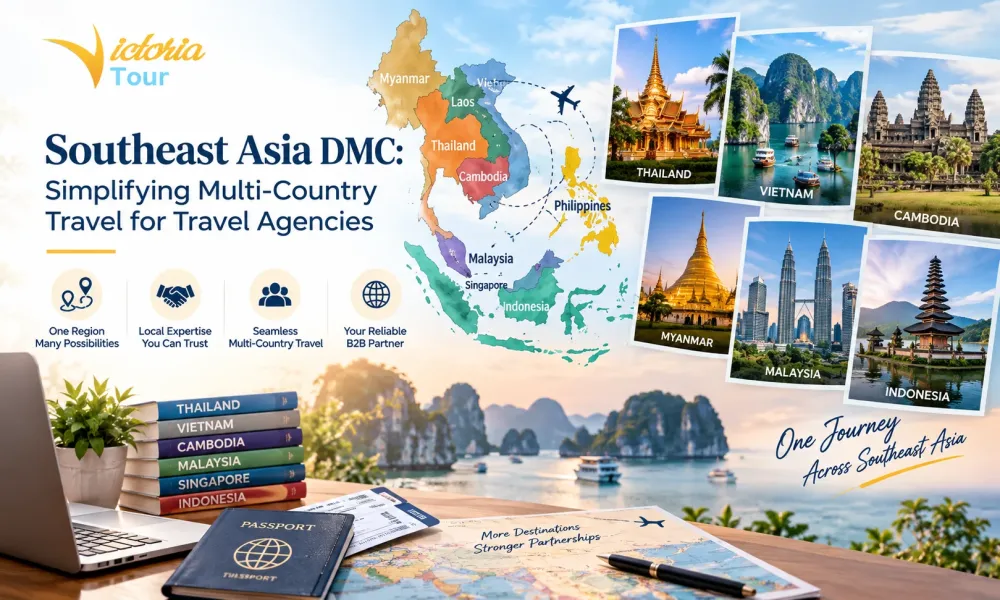
For a travel agency, selling a multi-country Southeast Asia itinerary can be commercially attractive. Vietnam, Cambodia, Thailand, Singapore, Malaysia and other destinations can be combined into one longer holiday, giving travelers more variety while creating opportunities for agencies to develop higher-value programs.
The challenge begins once the itinerary moves from the sales stage into actual operations. A traveler may see one holiday. In contrast, the travel agency, may be dealing with different hotels, transportation providers, guides, activity suppliers, currencies, schedules and destination contacts across several countries.
This is where a Southeast Asia DMC can become valuable. Instead of treating each destination as a completely separate booking, a DMC can help travel agencies coordinate the different destination components around one travel program. The goal is not simply to add another supplier, but to make a complex itinerary easier to plan, operate and support.
Why is multi-country tourism in Southeast Asia more complex?
Southeast Asia offers a diverse range of complementary destinations, from culturally diverse itineraries in Vietnam and Cambodia to city and beach getaways.
From a traveler's perspective, these combinations seem natural. However, operationally, each additional destination adds another layer of complexity. Hotels may have different booking and confirmation processes. Transportation options vary between markets. Travel times depend on local road conditions and airport locations.
Therefore, the entire itinerary needs to be considered as a comprehensive travel program, while each destination still has its own operational requirements. For travel companies, this can create additional work in areas such as:
Communicating and confirming with suppliers
Transportation between destinations
Coordinating hotels and room lists
Arranging guides and activities
Changing itineraries
Schedule changes
Special requests from travelers
Emergency or last-minute support
The more countries involved, the more important it becomes to have a clear coordination structure.
What Does a Southeast Asia DMC Do for Travel Agencies?
A DMC's role in multi-country travel goes beyond recommending places to visit. Its value comes from turning a proposed itinerary into a program that can actually operate on the ground.
Itinerary Planning
Travel agencies often begin with a client brief: the preferred destinations, trip length, traveler profile, budget and type of experience. The DMC can then help assess whether the proposed program makes operational sense. This includes considering the amount of time available in each destination, transportation between locations, arrival and departure schedules, hotel positioning and the pace of the overall itinerary.
For example, adding another destination may look attractive on paper, but it may also mean an additional flight, airport transfer and hotel check-in. A DMC can help identify when another destination genuinely adds value and when it simply creates more movement. This makes itinerary planning an important part of destination management rather than simply a creative exercise.
Supplier Coordination
A multi-country program can involve a large number of suppliers. Managing them separately can increase the amount of communication required from the agency.
A DMC can act as a destination-side coordination point, helping organize the relevant hotels, transportation providers, guides, restaurants, activities and other local services.
This is particularly useful when the travel agency is operating from overseas and does not have its own local team in every destination.
Local Destination Knowledge
Every destination has its own practical considerations. Knowing that two cities are geographically close does not necessarily mean they are convenient to combine. A transfer that looks short on a map may take significantly longer depending on the road network, airport location, border procedures or local traffic conditions.
Local destination knowledge helps agencies make these decisions before the itinerary reaches the client..
On-Ground Support
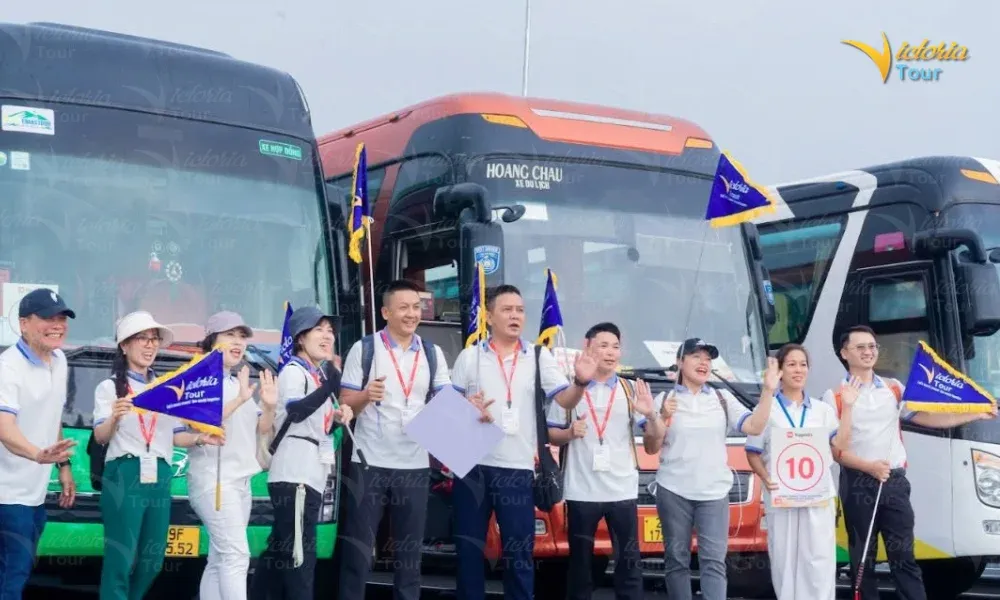
Once travelers arrive, the DMC's role can continue through local coordination. Airport transfers, hotel arrivals, guides, activities and schedule changes all need to work according to the agreed program. If something changes, having a local point of contact can make communication faster and more practical.
For travel agencies, this provides an additional layer of destination-side support without requiring them to build their own operational team in every market.
Coordination Matters More Than Simply Finding Suppliers
Finding hotels, restaurants or transportation providers is rarely the most difficult part of building a multi-country itinerary. The more complicated question is whether all of those services work together.
Consider a traveler arriving on an international flight. The flight is delayed, which affects the airport transfer. The later arrival then changes the hotel check-in time, which may affect a scheduled dinner or evening activity. None of these services is necessarily difficult to arrange individually.
The problem is that they are connected. This is why multi-country travel requires coordination rather than simply a collection of confirmed bookings.
A DMC can help agencies consider these connections during the planning stage. The objective is to reduce avoidable operational problems before travelers are already on the ground. For agencies, this can also make communication with clients easier. Instead of managing several local suppliers independently, the agency has a clearer structure for receiving updates, confirming arrangements and addressing destination-related changes.

Designing Multi-Country Itineraries Around Travel Flow
A good multi-country itinerary is more than just a list of countries. The order and pace of destinations can impact the overall comfort level of the trip.
Travel companies need to consider how travelers move between destinations, the time spent traveling, the timing of hotel changes, and whether the schedule allows enough time to truly experience each location.
A program designed for first-time travelers may require a different pace than a luxury route for experienced travelers. A family vacation might need fewer hotel changes, while a younger, more independent traveler segment might be more comfortable with a faster-paced itinerary.
Understanding the travel and sightseeing needs of each customer segment is crucial and commercially important. Therefore, Southeast Asia DMCs like Victoria Tour will support agencies to ensure smooth operations and meet all the needs that travelers desire.
A trip with too many short stops can be difficult to sell as a premium experience because travelers spend a significant amount of time during their vacation checking in, checking out, and traveling between locations, making it difficult for travel companies to evaluate the entire trip as a complete product.
Destination Knowledge Is Only One Part of DMC Expertise
Destination knowledge is important, but destination knowledge alone does not guarantee that an itinerary will work well in practice. For travel agencies, a DMC also needs to understand the operational side of the destination - how travelers move between places, how services connect, and what practical factors may affect the schedule.
A local DMC should be able to help agencies consider questions such as:
How much transfer time should be allowed?
Which airport is more convenient for a particular itinerary?
How long should travelers stay in a destination?
Which destinations combine naturally within the available travel time?
What happens when a service is delayed?
Which types of suppliers are appropriate for different traveler segments?
These details may seem small when an itinerary is first being planned, but they can have a direct effect on the overall travel experience. A hotel in the wrong location can unnecessarily add transfer time. An itinerary with too many activities can leave travelers with little time to rest. A tight connection between services can also become difficult to manage when there is a flight delay or unexpected change.
This is why agencies should evaluate a DMC based on more than its destination portfolio. The real value of local expertise is the ability to turn destination knowledge into practical decisions - helping determine what works together, what needs more time, and where potential operational issues should be considered before the trip begins.
For Vietnam programs in particular, this can extend into Vietnam ground handling services, where transportation, guides, arrivals, departures, and local supplier coordination need to work together as part of the wider route.
A DMC Can Also Support Travel Product Development
The role of a DMC does not have to begin only after an itinerary has already been finalized. A local destination partner can also contribute during product development for travel agencies and tour operators.
This can be useful when an agency wants to create a new Southeast Asia program for a specific market. For example, an agency may want to develop:
A Vietnam–Cambodia cultural program
A Vietnam–Thailand leisure itinerary
A multi-country family holiday
A Southeast Asia luxury journey
A regional MICE program
Each concept needs to be assessed according to its target travelers, budget, duration and operational requirements. The DMC like Victoria Tour can provide destination-side input on what can realistically be arranged, which services are suitable for the target segment and how the itinerary can be adapted.
This is particularly useful for agencies that want to move beyond standard package tours and create programs that respond more closely to their own market.

What Should Travel Agencies Look For in a Southeast Asia DMC?
Not every DMC will provide the same level of support. Before establishing a partnership, travel agencies should look at several practical areas.
Regional or Destination Coverage
The DMC should have clear knowledge of the destinations it claims to support. Agencies should understand whether the partner operates directly in those destinations or works through local partners.
B2B Experience
Working with travel agencies is different from selling directly to consumers. A B2B DMC needs to understand client briefs, agency workflows, quotation requirements, service standards and the importance of communication.
Operational Capability
The partner should be able to coordinate the practical elements behind the itinerary, including transportation, accommodation, guides, activities and schedule changes.
Communication
Clear communication becomes especially important when several destinations or suppliers are involved. Agencies need timely updates, clear confirmations and a defined point of contact.
Customization
A useful DMC should be able to adapt programs according to traveler profiles, market requirements, budgets and itinerary objectives rather than offering only fixed products.
Problem Solving
Travel does not always follow the original plan. Agencies should consider how a DMC handles changes, delays and unexpected operational issues. These factors can help travel agencies assess whether a potential partner is simply a supplier or can function as a reliable destination-management partner.

How Victoria Tour Supports Travel Agencies
With overseas travel agencies, having a reliable local partner is important when building and operating Vietnam programs. Therefore, Victoria Tour provides destination-side support across key travel services, helping agencies coordinate the Vietnam component of their itineraries while maintaining flexibility in how the wider Southeast Asia program is structured.
Local Support Across the Vietnam Program
Depending on the itinerary, Victoria Tour can support areas such as:
Accommodation & hotel coordination
Airport transfers and transportation
Local guides and sightseeing
Restaurant arrangements
Group travel operations
Customized itineraries and destination services
The scope of support can be adapted to the requirements of each program, whether the agency is arranging an individual itinerary, a private group or a more complex travel program.
A Local Partner Within a Regional Itinerary
A Southeast Asia itinerary does not necessarily need to be operated by one company from beginning to end. An overseas agency may work with different destination partners across the region while using Victoria Tour to manage and coordinate the Vietnam component. This allows each destination to be supported by a partner with relevant local knowledge, while the agency retains control over the overall itinerary and client relationship.
For example, a multi-country program may involve several destination partners, with Victoria Tour handling the Vietnam arrangements and coordinating the services required during the travelers' stay in the country.
Clear Roles, Better Coordination
For multi-country travel, the key is not simply having one supplier for every destination. It is having clear responsibilities between destination partners and making sure each component fits into the wider travel program.
By supporting the Vietnam side of a regional itinerary, Victoria Tour gives travel agencies a local point of contact for destination services, while allowing them to maintain their existing regional partnerships where appropriate. This approach gives agencies more flexibility when building Southeast Asia programs without requiring one DMC to operate every destination.
Why Travel Agencies Partner With Victoria Tour
Victoria Tour supports travel agencies through destination management and regional travel solutions designed around operational simplicity, local expertise and traveler experience. For overseas travel partners, having a local DMC means gaining a destination-side team that can help turn an itinerary into a practical program and coordinate the services required throughout the journey.
Regional Travel Expertise
Southeast Asia itineraries often involve several destinations, each with its own suppliers, transportation arrangements and operating conditions. Victoria Tour approaches these programs from the destination side, helping travel partners understand how individual destinations and services can fit into a wider journey.
For Vietnam programs, this local knowledge covers the practical details behind the itinerary, from accommodation and transportation to guides, sightseeing and local experiences. Travel agencies can also use Vietnam DMC support when they need a destination partner to manage the Vietnam component of a wider regional program.
The focus is on creating a journey that makes sense as a whole, rather than treating every destination as an isolated product.
Integrated Ground Operations
Once an itinerary has been confirmed, the quality of the program depends on how well its individual services work together. Accommodation, transportation, guides, activities, restaurants and other destination services all need to follow the agreed schedule and traveler requirements.
Victoria Tour coordinates these ground services as part of the wider travel program, helping agencies maintain a clearer operational structure while travelers are in Vietnam. This is particularly relevant for group and multi-service programs, where a change to one arrangement can affect other parts of the itinerary.
Customized Program Development
Different travel markets have different expectations. A family holiday, luxury itinerary, group tour or corporate program may require very different accommodation, transportation, activities and pacing.
Victoria Tour works with travel partners to adapt Vietnam programs around traveler profiles, market requirements and commercial objectives. This allows agencies to develop programs that are more closely aligned with their own customers rather than relying entirely on standardized itineraries.
Customization can involve the destinations included, length of stay, accommodation level, activities, dining arrangements, transportation and other services required for the specific program.
Dedicated B2B Focus
Victoria Tour partners with travel agents, tour operators, and other travel professionals, focusing on supporting the operational and destination requirements behind their programs.
For B2B partners, this means understanding that a DMC relationship is more than simply providing hotels or activities. Agents need clear communication, coordinated services, practical destination knowledge, and a partner who can work within their existing sales and operational processes.
This approach is particularly well-suited to multi-country tours, where agents may need to coordinate multiple destinations and suppliers simultaneously. A reliable DMC partner can provide destination-side expertise while allowing agents to focus on their customers, markets, and overall travel products. Helping build a network of working relationships that support individual itineraries while also laying the foundation for long-term regional tourism partnerships.
FAQ: Southeast Asia DMC for Travel Agencies
What is a Southeast Asia DMC?
Southeast Asia DMC is a destination management company that provides local expertise, supplier coordination, itinerary planning, transportation, accommodations, and operational support across one or more Southeast Asian destinations.
What does a Southeast Asia destination management company do?
A Southeast Asia destination management company helps travel agencies and tour operators manage destination-side planning, supplier relationships, itinerary development, and on-the-ground execution.
Why work with a Southeast Asia inbound operator?
An inbound operator provides local knowledge, supplier networks, and operational support that help agencies sell and operate travel programs more efficiently.
Can a Southeast Asia DMC support multi-country travel?
Yes. Many regional DMCs help coordinate itineraries spanning multiple destinations, ensuring consistency across transportation, accommodations, activities, and traveler services.
How do I choose a Southeast Asia travel company?
Look beyond pricing and evaluate destination expertise, operational capability, communication standards, supplier networks, customization, and support during travel.
Simplifying the Complexity Behind Multi-Country Travel
Southeast Asia gives travel agencies significant room to develop multi-country products, from cultural journey, holidays to luxury travel and MICE programs. Regional tourism cooperation also continues to encourage stronger connectivity and multi-destination travel across ASEAN.
However, for agencies, a multi-country itinerary becomes more demanding as destinations, suppliers and operational requirements increase. A DMC can help address that complexity by bringing together destination knowledge, itinerary planning, supplier coordination and on-ground support. For agencies looking to build more structured and operationally practical programs, working with a Southest Asia DMC can provide a clearer framework for managing the destination components behind the journey.
The value is not simply having another supplier. It is having a destination partner that understands how individual services need to work together so that the final program remains practical for the agency and coherent for the traveler. For travel agencies developing Southeast Asia programs, that distinction can make the difference between an itinerary that looks good on paper and one that is genuinely workable on the ground.
Plan Your Next Southeast Asia Program With Victoria Tour
Building a multi-country itinerary requires more than selecting destinations. Travel agencies also need reliable destination support, practical itinerary planning and coordinated services that can work together throughout the journey.
Victoria Tour works with travel agencies and tour operators to support Southeast Asia travel programs through destination expertise, operational coordination and customized program development. Whether you are developing a new multi-country itinerary or looking for a destination partner to support an existing program, our team can work with you to understand your market, traveler profile and operational requirements.
Do you need advice on Southeast Asia tour programs, or paperwork procedures for group tours, etc. Contact Victoria Tour to discuss your itinerary, destination requirements with our B2B team.