
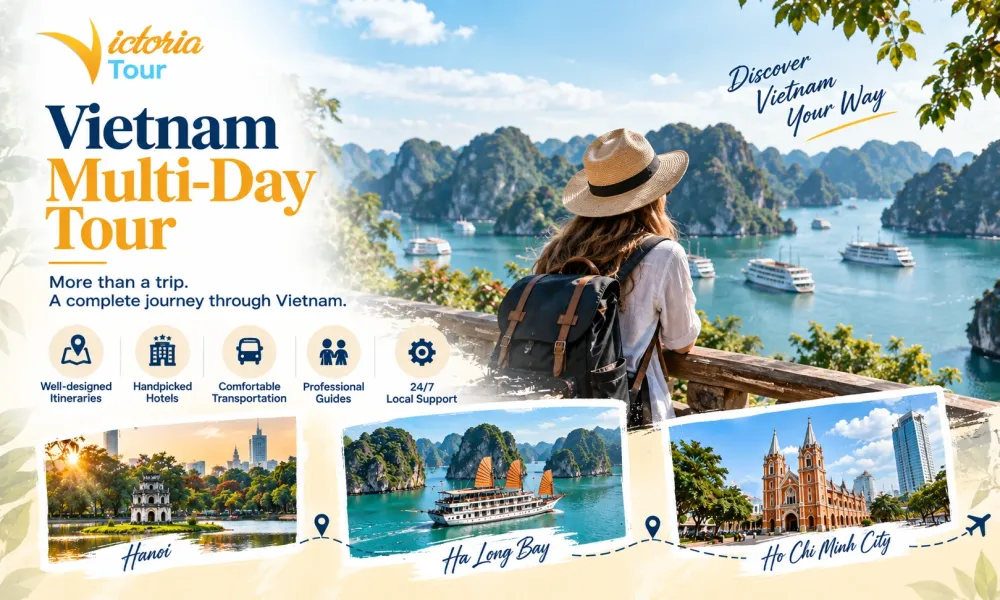
Planning a multi-day Vietnam tour is not simply about deciding how many destinations can fit into a certain number of days. For travel agencies and tour operators, a successful itinerary needs to balance destination variety, travel time, pacing, traveler expectations, and on-ground operations. A route may look attractive on a map, but if it involves too many hotel changes, long transfers, or tightly packed sightseeing days, the experience can become tiring for travelers and difficult to operate.
This is why the best Vietnam multi day tours are not necessarily the ones that cover the most destinations. They are the ones where each destination, transfer, activity, and period of free time has a clear purpose within the overall journey.
For international travel partners, working with a local Vietnam DMC can also make a significant difference. A DMC can help turn an itinerary concept into a practical travel program by coordinating accommodation, transportation, guides, activities, and other local services across different destinations.
What Makes a Good Vietnam Multi-Day Tour?
The main challenge in building a multi-day itinerary is not the number of destinations available. It is deciding which destinations belong together and how much time travelers should spend moving between them.
The original article makes this distinction by comparing “seeing” Vietnam with actually “experiencing” it. It argues that strong itineraries are built around flow, pacing, variety and meaningful experiences rather than simply maximizing the number of stops. With a travel partners, this can be translated into four practical considerations.
Destination Selection
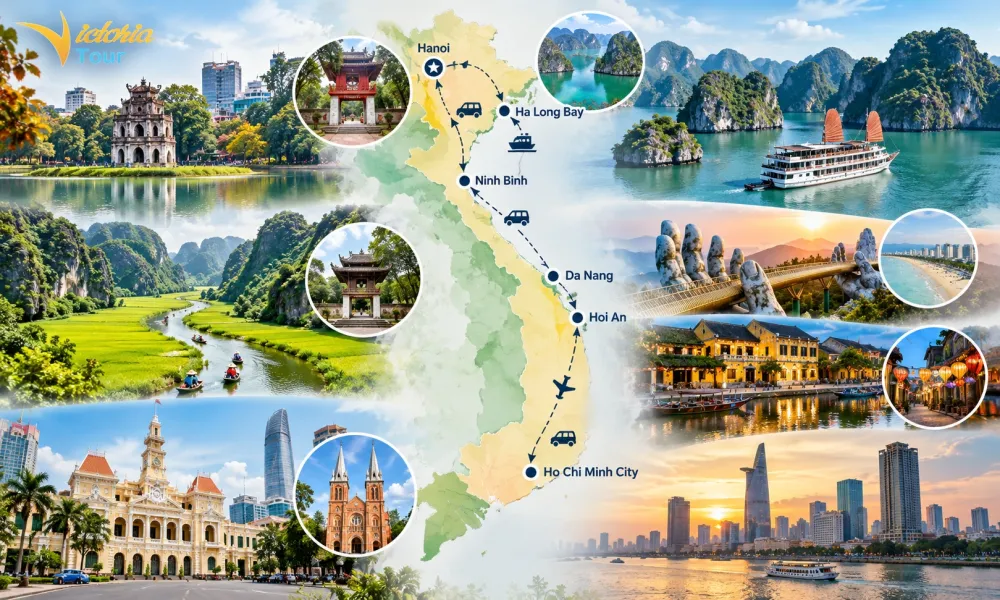
Each destination should have a clear role within the overall program. Hanoi may introduce travelers to Vietnam's history and urban culture. Ha Long Bay or Ninh Binh can provide a change of scenery and a stronger nature component. Hoi An and Hue can add heritage and cultural depth, while Ho Chi Minh City can bring a more contemporary perspective.
The aim is not necessarily to include every major destination. It is to create enough contrast without making the itinerary feel fragmented.
Pacing
Two itineraries can include the same destinations and still provide very different experiences. One may involve constant hotel changes and early departures. Another may allow travelers to stay two or three nights in key destinations, giving them time to explore without feeling rushed.
For travel agencies, pacing should therefore be considered part of the product design, not simply a scheduling decision.
Travel Time
Transportation takes time, and that time impacts the overall traveler experience. Airport transfers, domestic flights, road trips, transfers between cruises, and hotel changes must all be considered when planning an itinerary.
These factors can easily lead to unexpected events such as: guests lingering too long shopping or taking photos, longer-than-expected hotel check-out times, traffic congestion, etc. Any of these can significantly impact the smoothness and continuity of the entire trip (especially multi-destination trips).
Operational Feasibility
Many travel agencies choose to incorporate multiple tourist attractions and landmarks into a single day, which may seem appealing to travelers. However, adhering to a tight, multi-destination schedule is very difficult, not only because of travel time constraints but also because of the significant impact on the health of the travelers. This is especially true for international tourists from countries with weather conditions and time zones opposite to Vietnam. Frequent, rapid travel with little rest time can lead to jet lag, dizziness, and insomnia (some may experience heat shock if the weather change is too drastic).
The travel partner needs to consider:
Vehicle arrangements
Hotel availability
Guide availability
Domestic transportation
Attraction schedules
Restaurant arrangements
Group size
Luggage
Transfer time
Supplier coordination
This is one of the areas where a Vietnam DMC can support overseas travel companies by checking whether the proposed program can actually work on the ground.

Choosing the Right Tour Length for Your Vietnam Program
The number of days available should influence the structure of the itinerary from the beginning. A seven-day program should not simply be a compressed version of a fourteen-day tour.
Likewise, adding extra days should not mean adding destinations without considering how those additional stops affect the overall flow. The original file uses 7 days, 10 days and 14 days tour as three useful formats.
Vietnam 7 Day Tour: Focus on a Clear Travel Theme
A Vietnam 7 day tour works best when the itinerary has a clear focus. Instead of trying to cover the entire country, travel agencies can build a regional program or a carefully selected multi-city route.
For example:
Northern Vietnam
Hanoi
Ninh Binh
Ha Long Bay
Central Vietnam
Da Nang
Hoi An
Hue
The advantage of this approach is that travelers can experience several types of attractions without spending too much of the trip changing hotels or traveling long distances.
For travel partners, a focused seven-day program can also be easier to position for specific markets. A cultural itinerary, family program, culinary tour or short luxury escape can each use the same destination area but be designed around different traveler expectations.
Vietnam 10 Day Tour: Connecting Key Regions
A 10-day Vietnam tour offers greater flexibility for travelers in terms of rest and accommodation, and also makes it easier for travel companies to arrange destinations across different regions. For 10-day programs, the typical itinerary is as follows:
Hanoi
Ha Long Bay
Central Vietnam
Ho Chi Minh City
This itinerary allows travelers to explore diverse aspects of Vietnam without having to move every day, while still ensuring a full understanding and experience of history, culture, cuisine, nature, and contemporary Vietnam, without being too rushed.
Nonetheless, the key is not simply the number of destinations included. The itinerary needs to be structured around the connections between them. Traveling from Northern to Central Vietnam often requires consideration of airport transfers and domestic flights. Traveling between Central and Southern Vietnam creates a different transportation segment, and hotel check-in and check-out times, baggage handling, and sightseeing schedules need to be aligned with these transfers.
For an overseas travel company, these details can be difficult to coordinate remotely. Therefore, Vietnam DMC like Victoria Tour can help connect various suppliers and arrange transportation to ensure a convenient itinerary for clients.
Vietnam 14 Day Tour: More Time for Deeper Experiences
A Vietnam 14 day tour creates more space within the itinerary. The additional days can be used to extend stays in important destinations rather than simply adding more locations.
Travel agencies may use the additional time for:
Culinary experiences
Local activities
Cultural visits
Leisure days
Boutique accommodation
Family-friendly activities
Luxury experiences
Regional extensions
A longer itinerary does not always need more destinations to create value. The additional time can instead be used to explore selected destinations in greater depth, with more room for local experiences, leisure, and a comfortable pace. This flexibility allows travel partners and DMCs to adjust the program more effectively to different markets, budgets, and travel preferences.
Design the Itinerary Around the Traveler, Not Just the Map
Not every traveler looks for the same experience from a Vietnam multi-day tour. A cultural-focused program may require more time for heritage sites, local experiences, and authentic interactions, while family trips may need a more relaxed schedule and convenient transportation. Couples and leisure travelers may prefer a balance between sightseeing and free time, while luxury and VIP programs often require greater attention to accommodation, dining, privacy, and service details.
For travel agencies, understanding these differences makes it easier to build Vietnam tour programs that match the expectations of each target market. A well-designed itinerary should consider not only where travelers want to go, but also how they prefer to travel, how much time they have, and the level of service they expect.
Our goal is not to add more activities, but to make sure each part of the itinerary serves the traveler and the overall travel experience.
Cultural & Heritage Travelers
These travelers may place greater value on:
Historical sites
Local culture
Heritage destinations
Food
Local interaction
A program for this audience could place greater emphasis on Hanoi, Ninh Binh, Hue, Hoi An and other cultural destinations, while allowing enough time for guided experiences rather than simply visiting attractions.
Families
Family programs often need a greater focus on practical logistical elements, especially for families with young children. Travel companies can consider:
Shorter transfer periods
Comfortable transportation
Family-friendly hotels
Interactive activities
Flexible schedules
Appropriate free time
Schedules need to be suitable not only geographically but also for travelers of different ages.
Couples
For couples, they often have unique requirements; instead of filling each day with sightseeing, schedules can allow travelers to enjoy the destination at their own pace. Therefore, couples may prefer programs with:
Scenic destinations
Leisure time
Boutique accommodation
Culinary experiences
Romantic settings
Flexible schedules
Luxury & VIP Travelers
For luxury programs, itinerary design may focus more heavily on:
Privacy
Personalized arrangements
Premium accommodation
Private transportation
Flexible schedules
Selected local experiences
This is where a DMC can help travel agencies move from a standard itinerary toward a more tailored program.
Travel Time and Transportation Are Part of the Product
Transportation is an important part of any Vietnam multi day tour. The quality of the journey depends not only on the destinations included, but also on how comfortably and efficiently travelers move between them.
Long road journeys, early airport departures, frequent hotel changes, or poorly coordinated transfers can affect the pace of the entire program. For travel agencies, transportation therefore needs to be considered as part of the itinerary from the planning stage, rather than treated as a separate operational detail.
Depending on the itinerary and traveler profile, a multi-day Vietnam program may involve:
Airport transfers
Private cars
Group coaches
Domestic flights
Cruise transfers
Hotel-to-attraction transportation
Intercity transfers
MICE transportation
For a Vietnam DMC, the role is to coordinate these transportation requirements according to the itinerary, group size, schedule, and service level. This includes working with local drivers and transport suppliers, arranging suitable vehicles, coordinating pickup times, and making adjustments when the itinerary changes. Transportation requirements can also vary significantly between different types of programs. When transportation is planned alongside the itinerary, travel partners can create multi-day programs that are more practical to operate and more comfortable for travelers.

The Role of a Destination Management Company (DMC) in Vietnam for a Multi-Day Tour
A multi-day tour in Vietnam is more than just connecting destinations on an itinerary. As the number of destinations and travel days increases, travel partners may need to coordinate accommodation, transportation, guides, restaurants, activities, and local suppliers across multiple locations.
For overseas travel companies and tour operators, working with a Destination Management Company (DMC) in Vietnam can help consolidate these arrangements through a single local partner. The DMC can coordinate on-site services while ensuring the itinerary aligns with the agreed-upon schedule, traveler profiles, and service requirements.
Accommodation Coordination
Multi-destination tours often require travelers to stay in multiple hotels during a single trip. Each hotel needs to match not only the preferred room category and budget but also the daily itinerary and travel plans.
Destination Management Companies (DMCs) in Vietnam can assist travel partners in the following areas:
Hotel selection and booking
Room arrangements for groups
Room categories and special requests
Check-in and check-out coordination
Hotel location relative to attractions and transportation
Requests for early check-in or late check-out when necessary
Coordination between hotel stays and the overall itinerary
This coordination is especially crucial for large group tours or MICE (Meetings, Incentives, Conferences, and Exhibitions) events. Besides managing the number of people, the tour coordinator also needs to pay attention to information about the number of rooms, their quality, and specific arrival and departure schedules.
Transportation & Airport Transfers
Transportation is one of the key operational elements of a multi-day tour. Travelers may require different types of transportation throughout the program, depending on the destinations, group size, and service level. A DMC can coordinate:
Airport pickup and drop-off
Private cars
Group coaches
Intercity transportation
Hotel transfers
Transportation connected with domestic flights
VIP and executive vehicles
The local team can also coordinate with drivers and transportation suppliers when flight schedules, pickup times, or itinerary arrangements change.
For travel agencies, this provides a single local point of coordination rather than requiring communication with multiple transportation suppliers in different destinations. Travel partners can also work with a local team for Vietnam airport transfer services when airport pickup, drop-off, and group transportation need to be coordinated as part of the wider itinerary.
Local Guides & Destination Experiences
Guides are an essential part of the service at every destination, especially for international travelers. Local guides not only provide information about attractions but also help visitors better understand the destination, manage daily itineraries, and communicate with local vendors when needed.
A destination management company (DMC) in Vietnam can help travel partners arrange guides and experiences tailored to the type of program, destination, and traveler profile, such as:
English-speaking and other language-speaking guides
Licensed destination guides (if needed)
Private tours
Cultural and heritage experiences
Local culinary experiences
Family-friendly activities
Luxury and VIP experiences
Group activities
Guide and support staff for MICE programs
Local coordination also allows travel partners to tailor experiences to their target market. For example, a program designed for culturally-oriented travelers might dedicate more time to heritage and local experiences, while a program geared towards entertainment might focus more on relaxation and leisure time.
Restaurant & Diet Coordination
Arranging meals can become more complicated when a multi-day trip includes multiple destinations, varying group sizes, and different dietary requirements.
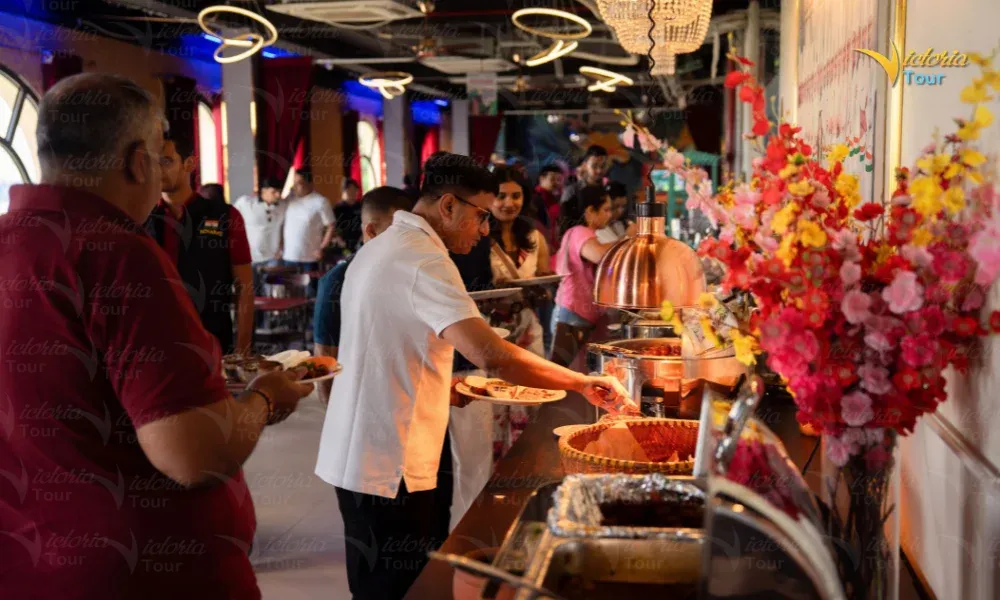
For international travelers, dietary requirements are often quite strict, as some countries have stringent requirements such as vegetarian, vegan, Jain, halal, allergy, or other dietary preferences that may require restaurants to prepare suitable menus in advance. Therefore, Local DMCs will support international agencies in preparing and ensuring that each guest's meal needs are met:
Restaurant selection based on itinerary and group profile
Restaurant reservations
Meal arrangements for the group
Meal timing and coordination
Vegetarian and vegan requirements
Religious dietary requirements
Special menus and food restrictions
Restaurant arrangements for large groups
Coordination with restaurants before the group arrives
Group Tour & MICE Management
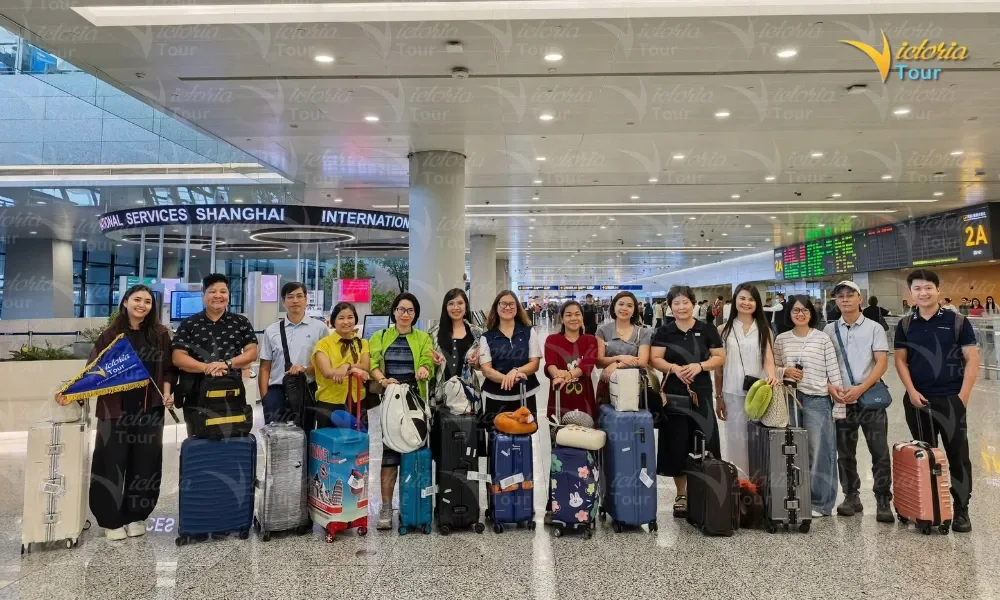
Group tours and MICE programs typically require a higher level of operational coordination than regular private tours. A program can include dozens of travelers, multiple vehicles, numerous guides, group meals, hotel transfers, and event-related activities and transportation.
For international companies and event organizers, Vietnam can be an attractive destination for business trips, incentive programs, meetings, and other MICE activities. However, managing a group of travelers from multiple destinations requires careful coordination between the travel company, local suppliers, hotels, transportation providers, and event venues.
A destination management company (DMC) in Vietnam can support group tours and MICE programs with:
Airport transfers and group pick-ups
Transportation allocation and schedules
Hotel check-ins and group transfers
Transportation to event venues
Group meals and restaurant arrangements
Multiple teams of guides
Scheduled sightseeing and activities
VIP transportation
Luggage coordination
On-site support in case of schedule changes
For larger groups, the DMC can act as a local coordination point between different suppliers. This helps ensure that transportation, accommodation, meals, activities, and event arrangements follow the same schedule and service requirements.
For travel companies and MICE event organizers, this local support is particularly useful when the program needs to be flexible. Changes to arrival times, group travel schedules, activities, or event schedules can be communicated and coordinated locally without requiring the overseas partner to directly manage each supplier.
Why Local Coordination is Important
The role of a DMC is not simply to arrange individual services. It's about ensuring those services work together as part of the itinerary.
Hotel bookings need to align with arrival schedules. Transportation needs to fit with flight and sightseeing times. Restaurant reservations need to fit with the group's daily travel schedule. Guides, drivers, hotels, and local suppliers all need accurate information at the right time.
This becomes even more crucial when the itinerary includes multiple destinations and service providers. Even a well-designed itinerary can become difficult to execute if individual arrangements aren't properly coordinated. This local coordination makes multi-day tours in Vietnam more practical, adaptable, and consistent for travelers from arrival to departure.
Planning a Vietnam Multi-Day Tour for Different Travel Markets
A well-designed multi-day tour needs to work from both the traveler's perspective and the travel agency's perspective. It should offer a clear and appealing experience for the customer while remaining realistic to quote, customize, operate, and sell.
Before finalizing the itinerary, travel partners should consider several factors that directly affect the product structure and its suitability for the target market.
Market
The same Vietnam itinerary may not work equally well for every type of traveler. Travel agencies should first identify who the program is designed for and what that market is looking for. Potential target groups may include:
Families looking for comfortable pacing and convenient transportation
Couples interested in a balance of sightseeing, leisure, and experiences
Luxury travelers expecting higher service levels and more flexibility
Cultural travelers looking for heritage, local life, and authentic experiences
Group travelers who require coordinated transportation, meals, and activities
Corporate clients planning company trips or incentive programs
MICE delegates requiring structured schedules and reliable ground operations
Understanding the target market helps determine how destinations, activities, accommodation, transportation, and free time should be combined within the itinerary.
Duration
The number of travel days directly impacts the amount of content that can be included in the program. Different tour lengths offer different experiences for different groups of travelers. For example, a 7-day Vietnam tour might need to focus on a specific area or a few specific destinations to avoid excessive travel time. A 10-day program can connect many important destinations, while a 14-day itinerary offers more flexibility in terms of destinations, length of stay, additional experiences, and time for rest and relaxation.
It's crucial to consider not just how many destinations can be included within the available number of days. Travel companies also need to consider how much time travelers actually spend experiencing each destination and how often they need to change hotels or modes of transportation.
Travel Style
The travel style determines how the itinerary should be structured and what type of services need to be included.
Programs may be designed as:
Private tours
SIC tours
Group tours
Luxury programs
Family holidays
MICE and corporate trips
A private tour may allow greater flexibility with departure times and activities, while a group program usually requires more fixed schedules and coordinated transportation. Luxury programs may require private vehicles, higher-category hotels, dedicated guides, and more personalized arrangements. For travel agencies, defining the travel style early makes it easier to build a consistent product and communicate the service level to customers.
Experience
A multi-day tour should have a clear reason for travelers to choose it beyond simply visiting a list of destinations. The experience can be shaped around the interests of the target market, whether that means culture, food, nature, relaxation, family activities, or a combination of different elements.
This is where customized Vietnam tours can give travel partners greater flexibility. Instead of using the same itinerary for every customer, agencies can adjust the destination mix, accommodation, activities, transportation, and pacing according to the traveler's needs.
A well-designed product can therefore use the same destinations while creating a different overall experience for different markets. This makes the itinerary more relevant to the customer while giving travel agencies more flexibility when developing and selling Vietnam tour programs.
From Itinerary Planning to On-Ground Delivery With Victoria Tour
A well-planned itinerary is only the starting point of a successful multi-day tour. Once the program is confirmed, every destination, and guide arrangement needs to be coordinated according to the agreed schedule. With overseas travel agencies and tour operators, this means having a local partner who can turn the proposed itinerary into a practical program on the ground. Victoria Tour supports travel partners throughout this process, combining itinerary planning with local supplier coordination and destination operations across Vietnam.
Tailor-Made Itinerary Development
Not every travel agency needs the same Vietnam product. Some may be looking for a short regional program, while others may need a longer itinerary covering several destinations. The program may also need to be adjusted for a particular market, budget, group size, or travel style.
Victoria Tour can work with travel partners to develop itineraries based on specific requirements, including:
Number of travel days
Target destinations
Preferred hotel category
Budget range
Private or group travel
Traveler demographics
Desired activities and experiences
Transportation requirements
Dietary or special service requirements
Rather than starting with a fixed itinerary and making small changes afterward, travel partners can develop the program around the requirements of their target customers. This approach is particularly useful for agencies selling customized Vietnam tours, where the itinerary needs to remain flexible while maintaining a practical structure and clear service level.
Integrated Ground Services
Once the itinerary is confirmed, the different services need to work together as one program. Victoria Tour can coordinate a combination of:
Hotel and accommodation arrangements
Airport transfers
Private and group transportation
Local guides
Sightseeing and activities
Restaurant reservations
Dietary requirements
Group and MICE transportation
On-ground destination support
For travel partners, having these services coordinated through one local team can simplify communication and reduce the need to manage multiple suppliers independently.
Travel partners looking to build a wider ground operation can also explore Vietnam ground handling services for support across transportation, accommodation, guides, meals, and other destination arrangements.
A Local Partner for Long-Term Product Development
The value of working with a DMC can extend beyond a single booking. As travel agencies develop their Vietnam portfolio, they may need to create new itineraries, refresh existing products, or adapt programs for changing market demand. Victoria Tour can work alongside travel partners as a destination-side resource when they need to review or develop Vietnam programs. Instead of starting from a fixed package every time, agencies can discuss the intended product and make adjustments based on their market positioning and customer requirements.
Entering the Vietnam market for the first time
Expanding its existing Vietnam product range
Developing a new itinerary for a specific customer segment
Updating an older program with new experiences
Creating a higher-value version of an existing tour
With a local partner involved in the destination, travel agencies can focus more on product development and customer relationships, while the destination-side details are handled through a team with local knowledge and supplier connections.
For Victoria Tour, the partnership is therefore not simply about arranging individual bookings. It is about helping travel partners develop Vietnam programs that fit their business and can be adapted as their product needs evolve.
Frequently Asked Questions
What are Vietnam multi day tours?
Vietnam multi day tours are travel programs lasting several days and combining multiple elements such as accommodation, transportation, sightseeing, activities, guides and local destination support.
Is a Vietnam 7 day tour enough?
A Vietnam 7 day tour can work well when the itinerary is focused on a specific region or a carefully selected combination of destinations. The key is to avoid using the available seven days to cover too many locations.
What can be included in a Vietnam 10 day tour?
A Vietnam 10 day tour can combine destinations across different regions, together with cultural experiences, nature, food, sightseeing and leisure time. The exact structure should depend on the traveler's profile and the amount of travel time the itinerary requires.
What does a Vietnam 14 day tour allow?
A Vietnam 14 day tour gives travel planners more room to combine regions while allowing additional time for cultural experiences, local activities, leisure and slower-paced travel.
Can Vietnam multi day tours be customized?
Yes. The itinerary can be adapted according to traveler profile, duration, destinations, hotel category, transportation preferences, activities and other program requirements.
What does a Vietnam DMC handle?
Depending on the program, a Vietnam DMC can coordinate services such as accommodation, transportation, airport transfers, guides, activities, restaurants, group movements and other local operational requirements.
A Well-Designed Vietnam Multi-Day Tour Goes Beyond the Map
A successful Vietnam multi day tour is not simply a collection of destinations connected by transportation. For travel agencies and tour operators, the itinerary needs to balance what travelers want to experience with what can realistically be delivered on the ground. Destination selection, pacing, transportation, accommodation, local experiences and supplier coordination all contribute to the final product.
This is where a reliable Vietnam DMC becomes part of the itinerary strategy, not simply a supplier at the end of the booking process. With local destination knowledge and coordinated ground services, Victoria Tour supports travel partners in developing and operating multi-day programs across Vietnam — from focused regional journeys to longer multi-destination itineraries.
Want to plan a Vietnam multi day tour for your clients? Contact Victoria Tour to discuss your itinerary, target market and destination requirements with our B2B team.