
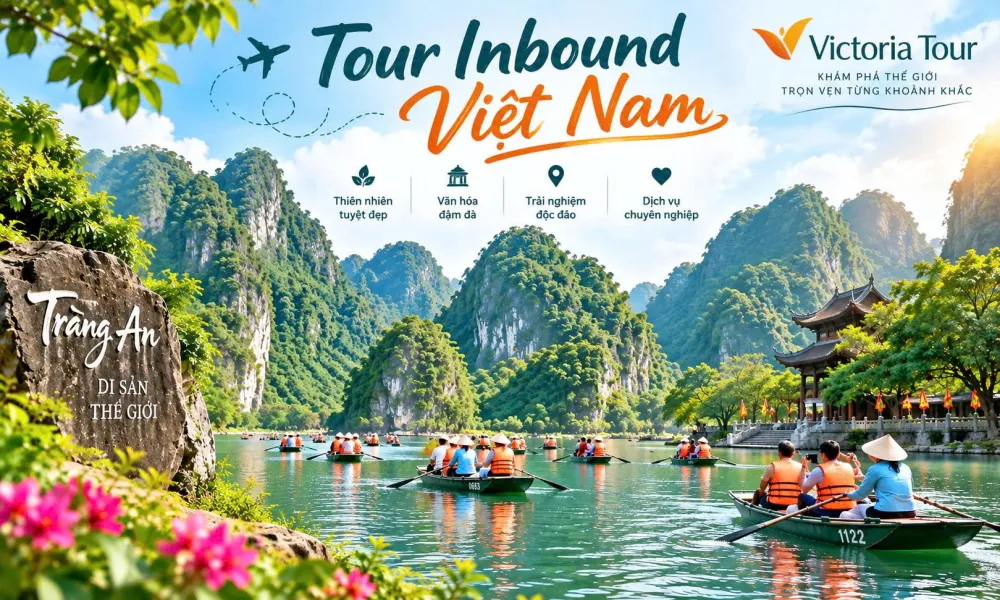
Vietnam is attracting more international travelers thanks to its diverse landscapes, rich culture, vibrant cuisine, and good value for money. However, creating the right itinerary for each market requires careful planning—from choosing destinations and services to coordinating the trip and handling unexpected situations. So, what exactly is a Vietnam inbound tour, what types of tours are available, and what should operators keep in mind when planning one?
What is a Vietnam inbound tour?
A Vietnam inbound tour is a travel program designed for international visitors coming to Vietnam for leisure, business, or events. It may follow a ready-made itinerary or be customized based on the group's travel dates, budget, interests, and specific needs.
A complete inbound tour usually includes more than sightseeing. It may cover airport transfers, transportation, hotels, restaurants, tour guides, attraction tickets, and on-the-ground assistance throughout the journey.
Why are Vietnam inbound tours becoming more popular?
A wide variety of attractive destinations
Vietnam offers a remarkable range of destinations, from mountains and river deltas to beaches and islands. Each region has its own character: historic Hanoi, spectacular Ha Long Bay, peaceful Hue, charming Hoi An, dramatic Ha Giang, and the relaxing island atmosphere of Phu Quoc.
The combination of natural beauty, history, and local life allows visitors to experience many sides of Vietnamese culture in a single journey.
_20260916_103404_575399.webp)
Good value for money
Compared with many destinations in the region, Vietnam offers flexible options for accommodation, dining, transportation, and sightseeing. This allows travel companies to create anything from budget-friendly programs to high-end holidays while still delivering a rewarding experience.
A broad range of travel experiences
Vietnam offers something for many types of travelers, including heritage tours, nature adventures, beach holidays, food tours, golf, MICE, and community-based experiences. This gives tour operators plenty of flexibility to create programs suited to the interests and expectations of different markets.
Popular types of Vietnam inbound tours
Cultural and historical tours
These tours are ideal for travelers who want to learn about Vietnam's history, architecture, spiritual traditions, and local way of life. Itineraries often include historical sites, museums, traditional craft villages, and culturally significant destinations.
Suggested destinations: Hanoi, Ninh Binh, Hue, and Hoi An.
_20260916_105314_041068.webp)
Nature and adventure tours
These tours suit travelers who enjoy beautiful scenery and outdoor activities. Programs may feature mountains, rice terraces, caves, bays, forests, and areas with unique ecosystems.
Suggested destinations: Ha Giang, Mu Cang Chai, Son La, Lai Chau, and Quang Binh.
Beach holidays
With its long coastline and wide range of resorts, Vietnam is an excellent choice for beach holidays combined with sightseeing. Travelers can relax by the sea, enjoy fresh seafood, and take part in a variety of recreational activities.
Suggested destinations: Da Nang, Nha Trang, Phu Quoc, and Ha Long.
MICE and group tours
MICE programs combine meetings, conferences, incentive travel, or corporate events with sightseeing and leisure activities. These tours require smooth coordination across transportation, accommodation, restaurants, meeting facilities, team-building activities, and gala dinners.
Suggested destinations: Ho Chi Minh City, Da Nang, Phu Quoc, and Ha Long.
Tailor-made tours
Private tours are designed around each group's schedule, budget, interests, and travel goals. Destinations, length of stay, service standards, transportation, and activities can all be adjusted as needed.
Suggested routes: Da Nang–Hoi An, Hanoi–Ninh Binh, and Ho Chi Minh City–Mekong Delta.
Tips for organizing a successful inbound tour
Understand the market and your guests' needs
Every market has different preferences in terms of food, language, travel pace, and service standards. Before designing the program, the organizer should understand the guests' age range, purpose of travel, budget, and any special requirements.
Build a well-balanced itinerary
The itinerary should balance sightseeing with time to rest and avoid too much travel in a single day. The time spent at each stop should also reflect local traffic, the travel season, and the group's physical condition.
Work with reliable suppliers
Hotels, restaurants, transportation providers, tour guides, and attractions all directly affect the guest experience. Working with capable suppliers that have clear standards and communicate well helps the trip run more smoothly.
Maintain quality and safety
All services should be checked before departure. The operations team should also prepare the full guest list, emergency contacts, health notes, and any other important information so that support can be provided quickly when needed.
Prepare backup plans
Weather, flights, traffic, and local services may change unexpectedly. Having practical alternatives in place helps the group avoid unnecessary disruption and enjoy a consistent experience throughout the trip.
Provide support throughout the journey
The operations team should monitor the program closely and stay in regular contact with the guide and suppliers. If anything changes, both partners and guests should receive clear and timely updates.
How to organize an inbound tour in Vietnam
A Vietnam inbound tour is usually organized in six steps:
- Receive the request and identify the target group.
- Create an itinerary based on the group's goals, schedule, and budget.
- Select, check, and book suitable services.
- Prepare staff, documents, and an operations plan.
- Monitor the tour and assist guests throughout the journey.
- Handle unexpected issues, collect feedback, and review the tour after completion.
To make this process easier, international tour operators often work with a DMC that has strong local knowledge. With experience in inbound tour operations and a broad supplier network across Vietnam, Victoria Tour provides B2B support from consultation and itinerary design to full on-the-ground delivery.
Victoria Tour – an inbound tour operator in Vietnam
Established in 2012, Victoria Tour has many years of experience in tourism and inbound operations. With an international office network, a team of more than 300 people, and the ability to operate programs in over 50 destinations, Victoria Tour provides flexible solutions for tour operators and travel companies.
Experience across different international markets
Since 2012, Victoria Tour has built extensive experience in designing and operating programs for a wide range of international travelers. Its network of more than 19 offices also supports closer coordination across markets and destinations.
A multinational team of more than 300 people
Team members receive regular training in destination knowledge, travel operations, and customer service. Close coordination between departments allows every program to be followed from the first request through to the end of the journey.
B2B solutions for travel partners
Victoria Tour supports tour operators and travel companies with product development, quotations, service bookings, and inbound tour operations in Vietnam. Each program is adapted to the target market, group size, and the partner's service standards.
Operations in more than 50 destinations
An extensive destination network allows partners to combine cultural, nature, beach, MICE, and local experiences with greater flexibility. It also makes it easier to create multi-destination itineraries for different customer segments.
Vietnam inbound tours vs. independent travel
What to look for when choosing a Vietnam inbound tour operator
Clear and transparent quotations
A quotation should clearly show what is included and excluded, the child policy, payment terms, and any possible additional costs. Transparent information from the beginning helps partners manage their budgets and avoid misunderstandings during operation.
A detailed, easy-to-follow itinerary
A professional program should clearly state the schedule, route, activities, meals, accommodation, and transportation. The clearer the itinerary, the easier it is for partners and guests to understand what the actual travel experience will be like.
Experience serving international travelers
The organizer should understand the language, culture, and travel habits of each market. This makes it easier to recommend suitable services, coordinate effectively, and assist guests when plans change.
Strong problem-solving skills
Weather, flights, vehicles, and local services can change without warning. An experienced operator should respond quickly, offer practical alternatives, and minimize the impact on the itinerary.
Frequently asked questions about Vietnam inbound tours
What is the difference between inbound and outbound tours?
An inbound tour serves international visitors traveling to Vietnam for holidays, business, or events. An outbound tour takes Vietnamese travelers to destinations outside Vietnam.
Which markets do inbound visitors to Vietnam come from?
Inbound visitors come from many regions, including Northeast Asia, Southeast Asia, Europe, North America, and Australia. Each market has different expectations and travel habits, so itineraries, meals, languages, and service standards should be adjusted accordingly.
Can a DMC help organize an inbound tour?
Yes. A DMC can help with itinerary design, quotations, service bookings, local supplier connections, tour operations, and on-site problem-solving.
How can an inbound tour be organized effectively?
The organizer should understand the guests' needs, build a balanced itinerary, choose reliable suppliers, and prepare backup plans. Working with an experienced DMC in Vietnam can also make the entire process smoother and more professional.
Can an international tour operator organize a tour in Vietnam independently?
Yes. However, working with a local DMC can save time when sourcing suppliers, designing itineraries, and coordinating services. A local DMC can also provide faster support when issues arise at the destination.
Conclusion
With its diverse landscapes, distinctive culture, and wide range of experiences, Vietnam offers strong potential for travel companies serving international markets. To run a successful program, tour operators should choose an experienced DMC with strong destination knowledge, transparent pricing, and reliable support throughout the journey.
Victoria Tour is ready to support B2B partners with the consultation, design, and operation of inbound programs in Vietnam. Every itinerary can be tailored to the target market, group size, and required service standards.